Most Instagram ad campaigns are a waste of money. Not because Instagram doesn’t work. It absolutely does, but because people set up ads the same way they’d hang a flyer on a lamppost and hope for the best. They pick a pretty image, write three lines of copy, hit publish, and then wonder why their cost per lead looks like a phone number. This is exactly where Instagram lead generation either succeeds or completely fails.
I’ve seen bootstrapped founders with a Rs. 500/day budget pull better leads than funded companies spending lakhs a month. The difference isn’t the money. It’s knowing what you’re actually doing. So let’s get into it. Specifically, what Instagram lead generation looks like when it’s working, and what it looks like when it’s quietly draining your account.
Instagram Lead Generation Isn’t About Going Viral, It’s About Going Specific
People confuse reach with results. Getting 50,000 impressions on a Reel feels great. It looks great in a screenshot. But if those 50,000 people have zero reason to buy what you sell, you’ve done nothing except feed an algorithm.
Effective Instagram lead generation is narrow by design. You’re not trying to talk to everyone. You’re trying to find the 300 or 3,000 people who genuinely need your product right now, and get your offer in front of them before your competitor does. That’s it. That’s the whole game. Everything else, the creative, the copy, the audience targeting is just how you do it.
Instagram Lead Generation Starts Before You Open Ads Manager
Nobody wants to hear this part, but here it is: your campaign will fail if your offer is weak. Instagram can get eyeballs on anything. It cannot make people care about something they don’t actually want.
Before you spend a single rupee on ads, write down the answer to this question: why would someone stop scrolling and give me their phone number or email right now? If your answer is something vague like ‘to learn more about us,’ you’re not ready. Nobody fills out a form to learn more about you. They fill out a form because they want the free consultation, the discount code, the guide that solves a specific problem they’ve been losing sleep over.
Get that offer locked in first. Then build the ad around it.
Use Instagram Lead Ads. Seriously, Stop Sending People to Landing Pages
This one surprises people. Instagram has a native ad format called Lead Ads where a form pops up inside the app, prefilled with the user’s name and email from their Meta profile. No redirects. No loading time. No ‘the page didn’t load on mobile.’ Just tap, confirm, done.
Conversion rates on Lead Ads are almost always better than sending cold traffic to an external landing page. And yet I see businesses skip this format constantly because they want people on their website. Here’s the thing; you can put them on your website after they submit the form. Use the thank-you screen to send them there. You get the lead AND the site visit.
Keep the form short. Name and email. Maybe one qualifying question. Something like ‘What’s your monthly marketing budget?’ if you need to filter serious buyers from tire-kickers. That’s your whole form. Don’t get greedy and ask for their address and company size and five other things. Every extra field costs you conversions.
The Creative That Actually Drives Instagram Lead Generation (And What Doesn’t)
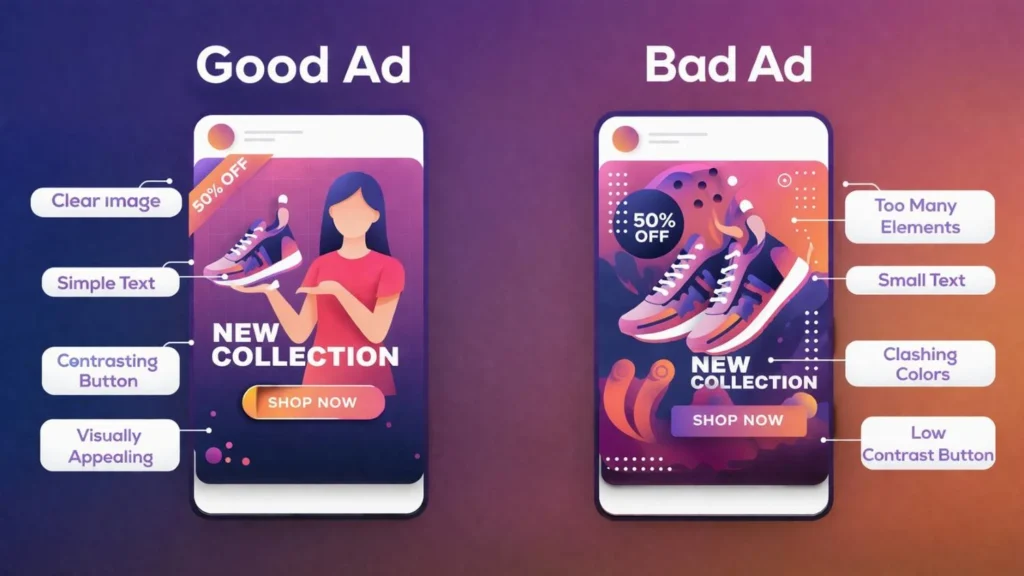
Stock photos of people smiling at laptops don’t work. They haven’t worked for years. Instagram users have a built-in detector for content that looks like an ad, and the moment something feels corporate and polished in that hollow way, they scroll past it without even registering what it said.
What works? Stuff that looks like it belongs on Instagram. Behind the scenes clips. Someone talking directly to camera explaining a problem. A real customer result shown in an unfiltered screenshot. Text on video reels with a blunt hook in the first two seconds. The creative doesn’t need to be expensive. It needs to feel real.
For the copy: open with the problem, not the product. ‘Spending hours creating content that gets zero engagement?’ lands better than ‘Introducing our social media management tool.’ People respond to being understood before they respond to being sold to. Lead with pain, follow with proof, end with a reason to act today.
Target Like You Know the Person, Not Like You’re Casting a Net
Three audiences worth running simultaneously for Instagram lead generation, in order of how warm they usually are:
Retargeting first. People who visited your website, watched your videos, or engaged with your Instagram in the last 30 to 60 days are already familiar with you. They need less convincing. Your cost per lead here will almost always be the lowest of any audience you run.
Lookalike audiences second. Upload your customer list to Meta and let it find people who behave similarly. This works remarkably well once you have at least a few hundred real customers in the list. The more data you give it, the better the match.
Interest based audiences third and be ruthless about narrowing them. ‘Entrepreneurship’ is a terrible interest to target because it includes everyone from a teenager who watched one Shark Tank episode to a serious business owner. Stack two or three interests together, add an age filter, and maybe a behavioural layer like ‘small business owners’ if available. Broad interest targeting burns budget fast for mediocre results.
Instagram Lead Generation Dies Without a Fast Follow Up System
This is where I’ve watched businesses lose deals they already won. Someone fills out your form at 11 PM. You see it the next morning. You send a follow up email at 10 AM. By then, that person has already had their morning chai, responded to work messages, and completely forgotten they filled out your form. You’re now a stranger.
Connect your Instagram Lead Ads to an email automation tool. Mailchimp, Klaviyo, HubSpot, whatever you’re using. So a welcome email fires within five minutes of form submission. That email should deliver whatever you promised in the ad immediately, then set up the next step clearly. Book a call, claim the offer, reply with a question, something specific.
If you’re selling something high ticket, have someone call the lead within the hour. Not tomorrow. Not end of day. Within the hour. The data on response time and close rates is brutal. Speed matters more than almost any other variable in the follow up process.
Measuring Instagram Lead Generation Results the Right Way
Cost per lead is the metric everyone watches. It’s also the metric that lies the most. A Rs. 80 lead that never picks up the phone is worse than a Rs. 400 lead that books a call and buys. Track cost per lead, but also track lead-to-call rate, call-to-close rate, and cost per actual customer acquired.
When you have those numbers, you can make real decisions. Maybe your lookalike audience produces leads at twice the cost but converts at four times the rate. That’s your best audience, scale it. Maybe your interest-based campaign looks cheap but everyone it brings in is just downloading your freebie and ghosting you. Kill it.
Also watch your ad frequency. Once people have seen the same ad four or five times, engagement drops off a cliff and your CPL climbs. Swap creative every two weeks minimum. You don’t need a whole new concept. Sometimes just changing the thumbnail or the first line of copy is enough to reset performance.
One Last Thing Before You Hit Publish
Instagram lead generation is not complicated. It just requires you to actually think about the person on the other side of the screen. What they want, what they’re scrolling past, why they’d stop for you specifically. Most businesses skip that step, and most businesses get mediocre results.
Start with a real offer. Use Lead Ads. Make creative that doesn’t look like an ad. Target tight. Follow up fast. Measure what matters. That’s the whole system. You don’t need a massive budget or a marketing team. You need to be more deliberate than whoever else is advertising to your audience right now.
Good news: most of them aren’t.